
Spine surgery is one of the biggest medical decisions a person can face. Yet two skilled surgeons can look at the same MRI and recommend different operations — or disagree about whether surgery is needed at all. That variation is exactly why a second opinion exists: not to create confusion, but to bring clarity before something irreversible.
Recommendations vary more than you'd expect
Spine care involves judgment calls: how much weight to give an MRI finding versus your symptoms, whether a fusion or a motion-preserving option fits better, whether the timing is right. Reasonable surgeons can land in different places. A second opinion gives you a second set of judgment calls to compare — and when both surgeons independently arrive at the same plan, you can move forward with real confidence.
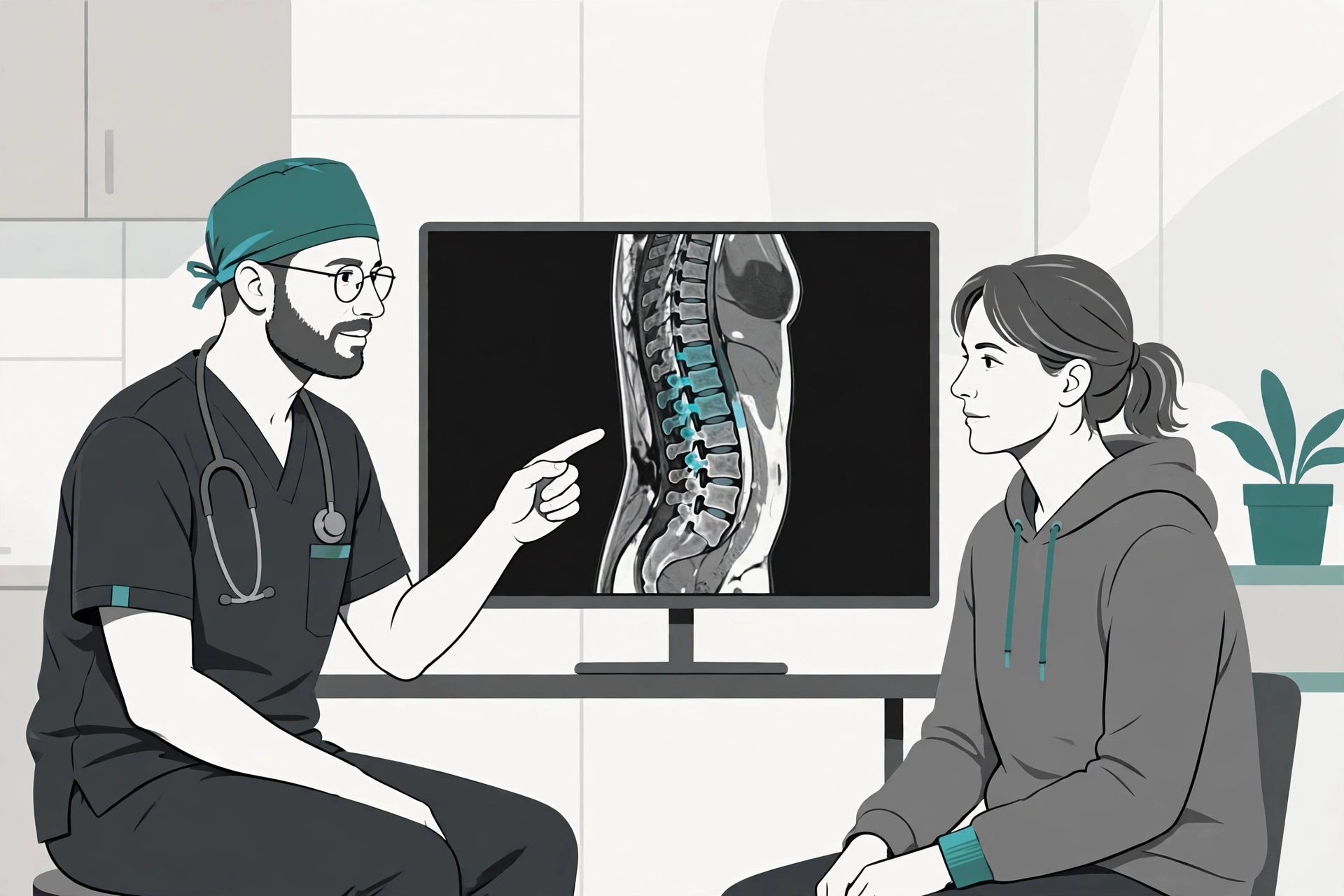
What a good second opinion actually answers
A worthwhile second opinion should leave you able to answer four questions: Is surgery truly necessary, or are there reasonable non-surgical paths left? If surgery is warranted, is the proposed operation the right one for your specific problem? Is the timing right, or is watchful waiting reasonable? And what are the realistic trade-offs of each option? If a consultation doesn't address those plainly, it wasn't a real second opinion.
When it matters most
A second opinion is worth the effort in a few specific situations: when a fusion has been recommended, especially a multi-level fusion; when a previous spine surgery didn't resolve the problem; when you're being pressed to schedule quickly without a clear explanation of why; and when the proposed diagnosis doesn't seem to match your symptoms. These are the cases where an independent look most often changes the plan — sometimes toward a smaller procedure, sometimes away from surgery entirely.
Getting one isn't disloyal
Some patients worry that seeking a second opinion insults their surgeon. It doesn't — good surgeons welcome it, because they know the stakes. Bring your MRI images (not just the report), your prior notes, and a list of what's been tried so far. The goal is a straight answer about your spine, from someone with nothing invested in the first recommendation.