
Enabling technology
Augmented Reality
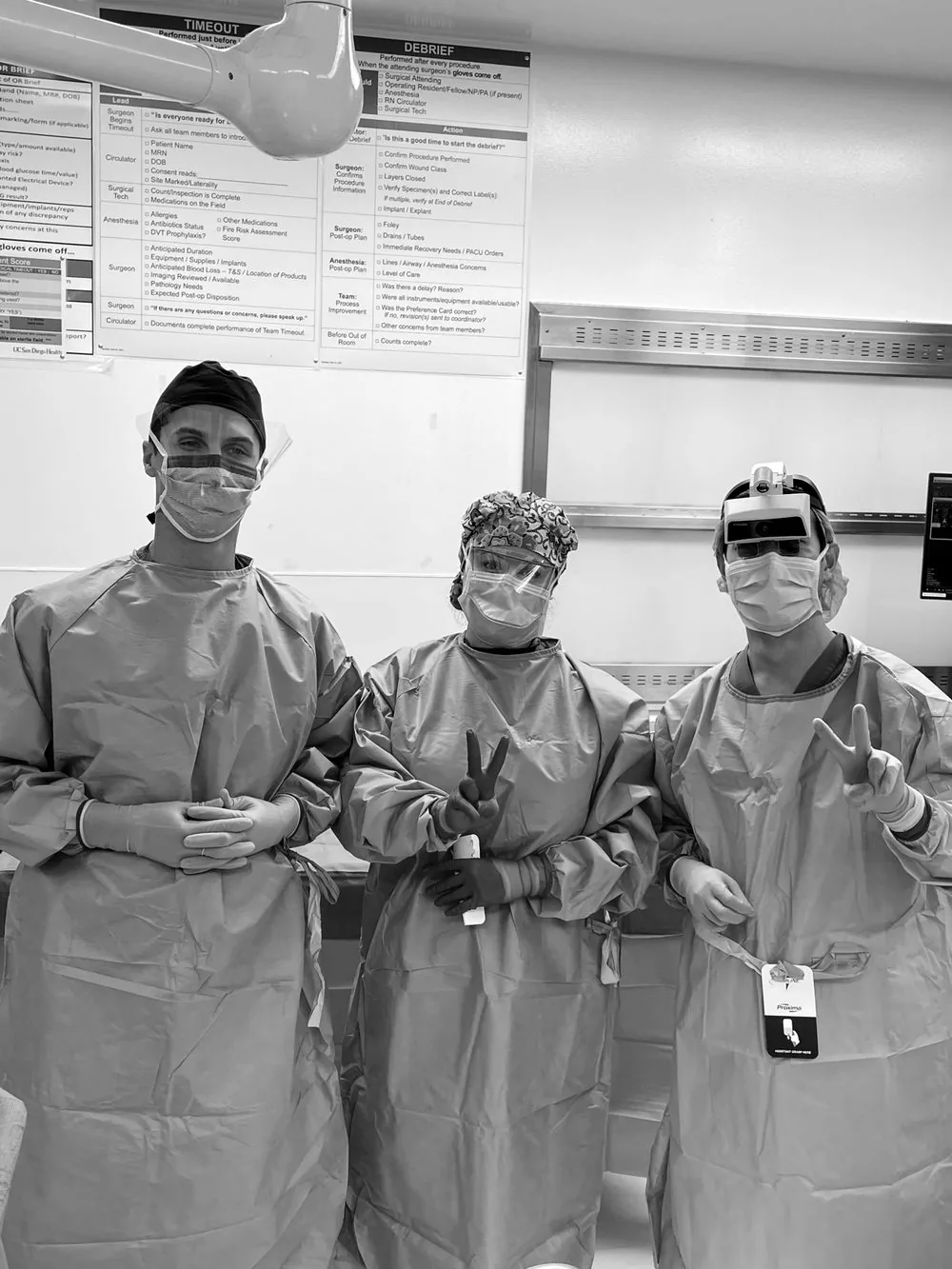
Augmented reality brings computer-assisted navigation guidance directly into the surgeon's line of sight — overlaid on the real anatomy — instead of on a separate monitor across the room.
What it is
Wearing an augmented-reality headset, the surgeon sees navigation data — instrument position, planned trajectories, and anatomic references — projected as a three-dimensional overlay on the actual surgical field.
Augmented reality computer assisted navigation. Enabling technology.
How it supports precision
Traditional navigation requires looking back and forth between the patient and a monitor; augmented reality keeps guidance and anatomy in the same visual field. That continuity supports orientation, focus, and procedural accuracy, particularly during screw placement and alignment work.
By reducing the need to mentally translate between a screen and the patient, the overlay helps the surgeon stay immersed in the operative field while still benefiting from imaging-based guidance.
Its limits
Augmented reality is only as reliable as the navigation system beneath it. If registration is inaccurate, the overlay will be too — which is why it is verified against direct visualization and anatomic landmarks, not trusted blindly.
It is a guidance aid, not an autonomous system. The plan it displays, the judgment behind it, and the final verification of every implant remain the surgeon's responsibility.
Initial consultation or second opinion?
Bring your imaging and your questions. Dr. Choi reviews the problem carefully and explains the options — including whether surgery is even the right next step.